 (309) 844-0564
Isn’t it a coincidence that you’ve found this just as you’re considering waterproofing your basement? Understanding the importance of proper ventilation can make all the difference in maintaining a moisture-free, healthy basement environment. You see, without good ventilation, you’re leaving your basement vulnerable to a host of issues, from mold growth to structural damage. But what exactly does proper basement ventilation entail, and what are the best techniques to achieve this? Well, why don’t we explore this together? Buckle in; you’re about to discover how to make your basement safer and more comfortable.
A vast majority of homeowners overlook the importance of proper basement ventilation. You might be one of them. It’s easy to push it to the back of your mind, given that basements are often out of sight, out of mind.
But here’s why you shouldn’t: lack of ventilation can lead to a host of problems that you’d rather avoid.
For starters, poor ventilation creates an ideal environment for mold and mildew to flourish. This not only poses a health risk to anyone living in the house but also can cause extensive damage to your property.
Additionally, it can lead to a buildup of radon gas, which is colorless, odorless, and known to cause lung cancer.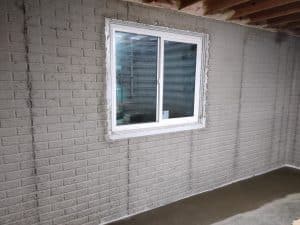
Proper ventilation guarantees there’s a continuous flow of air, which helps keep the humidity levels in check. This prevents condensation, minimizing the risk of dampness and subsequent mold growth.
Furthermore, it helps flush out radon gas, mitigating its harmful effects.
Understanding basement ventilation basics is thus a necessary step in maintaining the structural integrity of your home.
It’s not just about comfort, it’s about safety too. Don’t overlook it.
Why is ventilation essential in waterproofing your basement? It plays a significant role in reducing the dampness that often plagues basements, which is a fundamental step in any successful waterproofing strategy.
Think of ventilation as the unseen hero in your basement. It helps to regulate the temperature, keeping it cooler in the summer and warmer in the winter. This regulation helps to prevent condensation, which can lead to moisture accumulation, a major contributor to basement dampness.
Moreover, proper ventilation reduces humidity levels, another source of moisture that can undermine your waterproofing efforts. Lower humidity levels not only help to protect the structural integrity of your basement, but they also create a more comfortable environment.
But it’s not just about comfort. Your basement’s ventilation system aids in preventing the growth of mold and mildew, both of which thrive in damp conditions and can cause serious health issues, not to mention damage to your property.
Venturing into a poorly ventilated basement, you may unwittingly expose yourself to a host of risks. Lack of proper ventilation can lead to an accumulation of dangerous gases like radon, a naturally occurring radioactive gas that’s linked to lung cancer. It’s invisible, odorless, and tasteless; you won’t know it’s there until it’s too late.
Additionally, poor ventilation promotes the growth of mold and mildew, which can severely impact your home’s air quality. It’s not just an aesthetic issue; certain types of mold can cause health issues, including allergic reactions and respiratory problems.
Furthermore, a lack of ventilation leads to dampness. Damp basements are a breeding ground for pests like termites and cockroaches, which can cause significant structural damage to your home.
Moreover, poor ventilation causes increased humidity levels, which can lead to the deterioration of your basement’s structure, including its walls and foundation. This not only reduces your home’s value but can also lead to costly repairs down the line.
You’ll need to contemplate two primary types of ventilation for your basement: natural ventilation techniques and mechanical ventilation systems.
Natural ventilation relies on passive air flow, using strategically placed vents and windows to create a constant fresh air exchange.
On the other hand, mechanical ventilation systems actively force old, stale air out and draw fresh air in, often through the use of fans or other mechanical devices.
There are several natural ventilation techniques that you can employ in your basement to guarantee it’s properly waterproofed.
These techniques are essential in maintaining acceptable moisture levels, which is critical in preventing the build-up of dampness that can lead to mold growth and structural damage.
One effective method is cross ventilation. You can achieve this by strategically placing windows or vents on opposite ends of your basement.
This allows fresh air to enter, circulate, and drive out stale, moisture-laden air. Remember, the size and number of your windows or vents should be adequate to guarantee sufficient airflow.
Another method is the stack effect. Warm air naturally rises and exits through high openings, drawing in cooler air from lower openings.
You can capitalize on this by installing vents near the top and bottom of your basement walls.
Lastly, consider the use of solar chimneys. This clever design uses the sun’s heat to create an airflow, drawing moist air out of your basement.
Often, natural ventilation methods mightn’t be enough to maintain the ideal moisture levels in your basement, consequently necessitating the use of mechanical ventilation systems.
Mechanical ventilation systems, such as exhaust fans and supply fans, can be a game-changer in your fight against basement dampness.
Exhaust fans remove stale, moist air from your basement, replacing it with fresh air from the other parts of your house. They’re typically installed in your basement’s ceiling or walls, and you can control their speed based on the moisture level in the basement.
On the other hand, supply fans introduce fresh air into the basement, creating positive pressure that pushes out the damp, stale air. They’re usually installed in windows or exterior walls, and they come in various sizes to suit different basement dimensions.
However, you shouldn’t rely solely on one type of fan. A balance between exhaust and supply fans guarantees ideal air circulation in your basement, effectively controlling the moisture level.
To implement effective ventilation solutions in your basement, it’s first essential to understand the basics of basement ventilation.
Once you’ve grasped this, you can begin to choose a ventilation system that’s most appropriate to your specific needs.
After installation, maintaining the efficiency of your chosen system becomes key to ensuring continued ideal performance and moisture control.
Understanding basement ventilation is an essential aspect of effective waterproofing. It’s not just about keeping the area dry but also about maintaining a healthy living environment.
Basements, being below ground level, tend to be cooler and more humid than the rest of your home. This creates a perfect environment for moisture build-up, leading to mold growth and damp conditions.
Think about it this way: your basement ‘breathes’ just like you do. Air enters, circulates, and leaves. This process, known as ventilation, is critical to maintaining a dry, mold-free environment.
When there’s inadequate ventilation, you’ll notice a musty smell, a sign of trapped damp air and potential mold growth.
In cold climates, poor ventilation can cause condensation, leading to frost and ice build-up on the walls. In warmer climates, it can result in increased humidity levels, creating a breeding ground for mold and mildew.
And it’s not just about the health of your basement. Poor ventilation can affect your home’s overall air quality, impacting your health and comfort.
It can lead to respiratory problems, allergies, and other health issues. Proper ventilation is therefore a critical part of your basement waterproofing plan.
Understanding it well is the first step towards a dry, healthy basement.
Ventilation solutions, like a well-tailored suit, must be chosen with care and thoughtfulness for your basement’s unique needs. Your primary concern should be to find a system that effectively controls moisture, prevents mold growth, and keeps air quality at ideal levels.
There are a variety of options available to you. Exhaust fans, for instance, can help get rid of stale air and introduce fresh air into your basement. However, they’re not always the best choice for controlling humidity levels.
Dehumidifiers, on the other hand, are excellent at reducing dampness but don’t provide fresh air.
If you’re grappling with both moisture and air quality issues, you may want to evaluate an energy recovery ventilator (ERV). These systems both exhaust stale air and introduce fresh air, while also transferring heat and humidity to maintain a comfortable and healthy environment.
Having selected the right ventilation system for your basement, it’s time to guarantee its efficiency. Regular maintenance is vital in ensuring ideal performance and longevity of your system. Don’t let neglect turn your investment into a costly mistake.
Start by checking filters regularly. They’re your first line of defense against dust and dirt that can hamper your system’s performance. Depending on their type, you may need to clean or replace them every few months. Don’t overlook this simple task; it’s essential for maintaining your system’s efficiency.
Ensure proper airflow by keeping vents clear. Obstructions can restrict airflow, causing your system to work harder and consume more energy. Regularly inspect your vents for any blockages and remove them promptly.
It’s also important to pay attention to humidity levels. Too much moisture can lead to mold growth and damage your system. Invest in a good quality dehumidifier to regulate humidity and protect your ventilation system.
Lastly, consider scheduling regular professional inspections. Experts can spot potential issues before they escalate into costly repairs or replacements.
While guaranteeing proper basement ventilation may seem challenging, it’s an essential aspect of maintaining a clean and dry environment. Regular maintenance is key to guaranteeing optimum functionality, and it doesn’t have to be overly complicated.
First, inspect your vents regularly for any blockages. Dust, dirt, and debris can accumulate over time, reducing the efficiency of your ventilation system. Use a vacuum or a brush to clean the vents and maintain a clear airway.
Second, monitor humidity levels. Excessive moisture can lead to mold growth and structural damage. Use a dehumidifier to keep the humidity under control if needed.
Third, check your fans. If they’re not functioning properly, they won’t be able to circulate air effectively. Replace any faulty fans promptly to avoid exacerbating any potential issues.
Lastly, don’t neglect the exterior vents. Keep them free from obstructions like leaves or snow to guarantee they’re able to expel moisture efficiently.
In the end, proper ventilation isn’t just a refreshing change for your basement, it’s the lifeblood of effective waterproofing. Don’t let your basement become a breeding ground for problems. Implement and maintain a solid ventilation strategy. It’ll keep dampness at bay, safeguard your health, and preserve your home’s structural integrity. Remember, a well-ventilated basement isn’t just an investment in your home, it’s an investment in your peace of mind.

Justin Hidden is the dedicated owner of Basement Systems Waterproofing and Foundation, a trusted company specializing in basement waterproofing and foundation repair. With years of experience in the industry, Justin has built a reputation for delivering reliable, high-quality solutions that protect homes and ensure lasting structural integrity. Under his leadership, Basement Systems Waterproofing and Foundation has become a go-to provider for homeowners in need of expert waterproofing and foundation services. Justin’s commitment to excellent customer service, combined with his technical expertise, has earned the company the loyalty and trust of clients throughout the region. For more information on Justin Hidden and the services provided by Basement Systems Waterproofing and Foundation, visit their website at kmagbasementsolutions.com.